Contemporary Challenges: Spring-2021
Homework 1 : Due 3 Friday
- Scale reading assignment
S0 4188S
Read this 3 page excerpt from the book “Scale" by Geoffrey West (also available in plain text), then answer the following questions:
- When modeling the motion of a planet, what is a property of the planet we can ignore without causing significant error? Conversely, what is a property of the planet we cannot ignore if we wish to predict the planet's motion?
- This excerpt describes a “toy model” of a gas. The model is considered “coarse grained” because it ignores many fine-grained details. List one or more physical properties of gas molecules that the toy model ignores.
- Why do physicists use toy models and zeroth-order approximations?
- Piano tuners in Chicago
S0 4188S
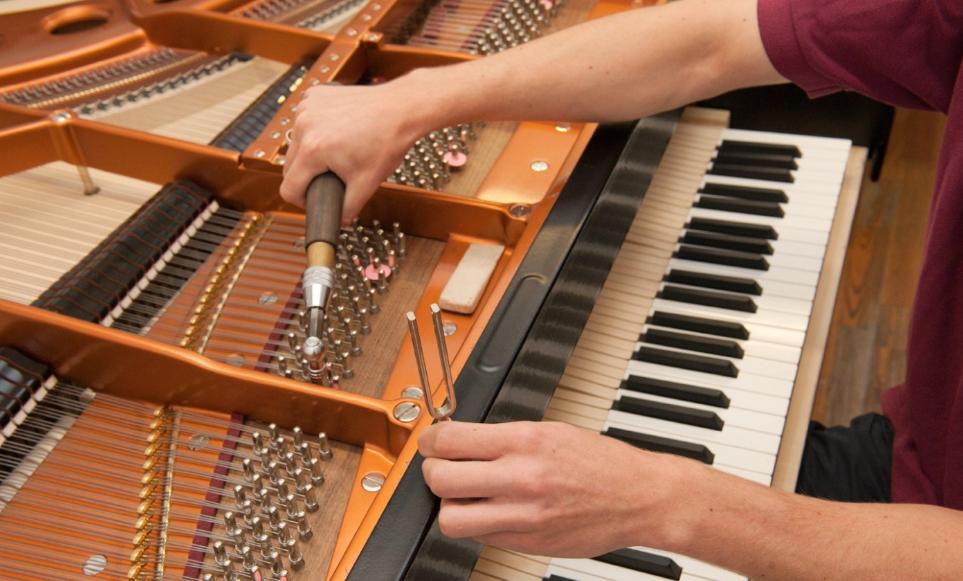
In a fabled story about Enrico Fermi (famous physicist), Fermi was asked how many people work as piano tuners in Chicago. Fermi did some mental arithmetic and quickly answered the question with surprising accuracy. Your task is to recreate Fermi's calculation.
Fermi's approach to solving such problems has spread far beyond the physics community. Today, tech companies and business consulting companies expect their employees to do Fermi problems: https://www.youtube.com/watch?v=KAo6Vn5bDF0.
Background: Pianos were popular when Fermi was living in Chicago in the 1940s. The population of Chicago was about 2 million people. Approximately 1 in 10 households had a piano. Pianos got out of tune at regular intervals (about 2 or 3 years), so the piano owner would call a technician (the piano tuner) to tighten/loosen the 88 strings inside the piano. Each tuning job took at least an hour.
Fermi used his general knowledge to estimate proportionality constants: For example, the number of pianos in Chicago was proportional to the number of households (the proporitionality constant was 0.1.).
To recreate Fermi's calculation make your own quantitaive estimates of proportionality constants (practice using your reasoning skills; avoid using Google). Each proportionality constant will be approximate; that is the essence of this estimation technique. To organize your calculation in a logical, easy-to-follow fashion, set up each line of math with one proportionality constant. For example,
\begin{align} ``(2 \times 10^6 \text{ people}) \div (3 \text{ people per household}) = 0.7 \times 10^6 \text{ households}'' \end{align}
Keep track of units as you go along: households, pianos, hours, etc. Use round numbers at each step of the calculation because a 5% calculational “error” will be smaller than the 10-30% uncertainty in the proportionality constants. How many piano tuners do you think were working in Chicago in the 1940s?